Chlorine tablets are the most common way Ottawa pool owners keep their water sanitized, but standing in the tablet aisle at any pool store can be genuinely overwhelming. Different brands, different chemistries, different sizes, different feeder compatibilities. Choose the wrong one and you can bleach your liner, damage your chlorinator, throw off your chemistry, or simply waste money on the wrong product.
This guide clears up the confusion. By the end, you’ll know exactly which tablet type suits your pool, what size fits your setup, how to deliver it safely, and which common mistakes to avoid. Getting your chlorine delivery right is one of the most important habits for clean, clear, low-hassle water all season, and the right chlorine tablets make the whole job easier.
Quick Answer: Which Chlorine Tablet Should You Use?
For most Ottawa pool owners, 3-inch stabilized Trichlor tablets used in an automatic chlorinator or floating dispenser are the standard choice. Never use Cal Hypo tablets in an automatic chlorinator, as they’ll damage it. One-inch tablets are better suited for smaller pools, spas, or precise dosing. As a rule of thumb, plan on one 3-inch Trichlor tablet per 5,000 gallons per week.
| Tablet type | Best for | Where to use | Safety note |
|---|---|---|---|
| Trichlor (3-inch) | Most inground pools | Chlorinator or floater | Acidic, may lower pH |
| Trichlor (1-inch) | Small pools, spas | Floater, small feeders | Same chemistry, faster dissolve |
| Cal Hypo | Shock only, not tablets | Never in a chlorinator | Adds calcium, unstabilized |
| Dichlor | Routine, pH-sensitive pools | Chlorinator or floater | Nearly pH-neutral |
How Chlorine Tablets Actually Work
Chlorine tablets are a slow-release delivery method. They’re compressed solids of chlorine compound that dissolve gradually as pool water flows past them, releasing sanitizer at a steady rate. The dissolution speed depends on the tablet’s chemistry, with some formulations dissolving quickly and others slowly.
This slow release is the whole point. Rather than spiking and crashing, tablets keep your free chlorine within the ideal range of 1.0 to 3.0 ppm continuously, which is the target ML Pool Services recommends. That steady baseline is what keeps water consistently sanitized between service visits. It’s a different job from liquid chlorine, which delivers an immediate dose, or granular shock, which delivers a concentrated burst to reset the water. Consistent weekly pool maintenance keeps that baseline dialed in all season.
The Three Main Chlorine Tablet Types
Just like choosing a filter, picking the right tablet chemistry matters. Here are the three main types.
Trichlor tablets (trichloroisocyanuric acid)
Trichlor is the industry standard for residential pools, and for good reason. These tablets are stabilized, meaning they contain built-in cyanuric acid that protects the chlorine from breaking down under Ottawa’s intense summer UV. They dissolve slowly, making them ideal for continuous sanitization, and they come in both 1-inch and 3-inch sizes.
One characteristic to keep in mind: Trichlor is chemically acidic, with a pH around 3, so continuous use can gradually push your pool’s pH down over time. It’s safe for automatic chlorinators, matching ML’s guidance to use only stabilized tablets in a feeder. The long-term consideration is that years of Trichlor use slowly builds up cyanuric acid in the water, which can eventually reduce chlorine effectiveness, a problem sometimes called “chlorine lock.”
Calcium hypochlorite (Cal Hypo) tablets
Cal Hypo is the tablet type most often misused by DIY owners. These tablets are fast-dissolving and simply aren’t designed for slow release. They’re unstabilized, offering no built-in UV protection, and they have a high calcium content that worsens the Ottawa Valley’s already-hard water and scale issues.
Most importantly, follow ML’s specific warning: do not use Calcium Hypochlorite tablets in an automatic chlorinator. Doing so can cause dangerous reactions and damage the unit. Cal Hypo is a legitimate and valuable product, but as a shock treatment, not as a slow-release tablet. For how to use it correctly, see the coordination note on shocking further below.
Dichlor tablets (dichloroisocyanuric acid)
Dichlor is less common in tablet form and more often sold as granular, but it’s worth knowing. Like Trichlor, it’s stabilized against UV, but it dissolves faster. Its big advantage is that it’s nearly pH-neutral at around 7.0, meaning less pH management for you. It’s sometimes marketed as a multi-use product.
A quick note on bromine tablets: they exist, but they’re primarily used in hot tubs and indoor pools rather than typical Ottawa residential outdoor pools. For most backyard pools, chlorine tablets are the right call.
Tablet Sizes: 1-Inch vs. 3-Inch
Size matters more than most owners realize. 3-inch tablets are the standard for most residential inground pools. Their slower release means less frequent refilling and better performance in larger volumes, with a single tablet typically dispensing over roughly 7 to 10 days depending on flow and temperature.
1-inch tablets are better suited for smaller pools under 15,000 gallons, spas, and precision dosing, dispensing in about 2 to 3 days. Before buying either, check your chlorinator or floater specifications, since some feeders accept only one size.
How to Use Chlorine Tablets (Three Delivery Methods)
How you deliver tablets matters just as much as which ones you choose. There are three methods, ranging from best practice to not recommended.
Automatic chlorinator (recommended)
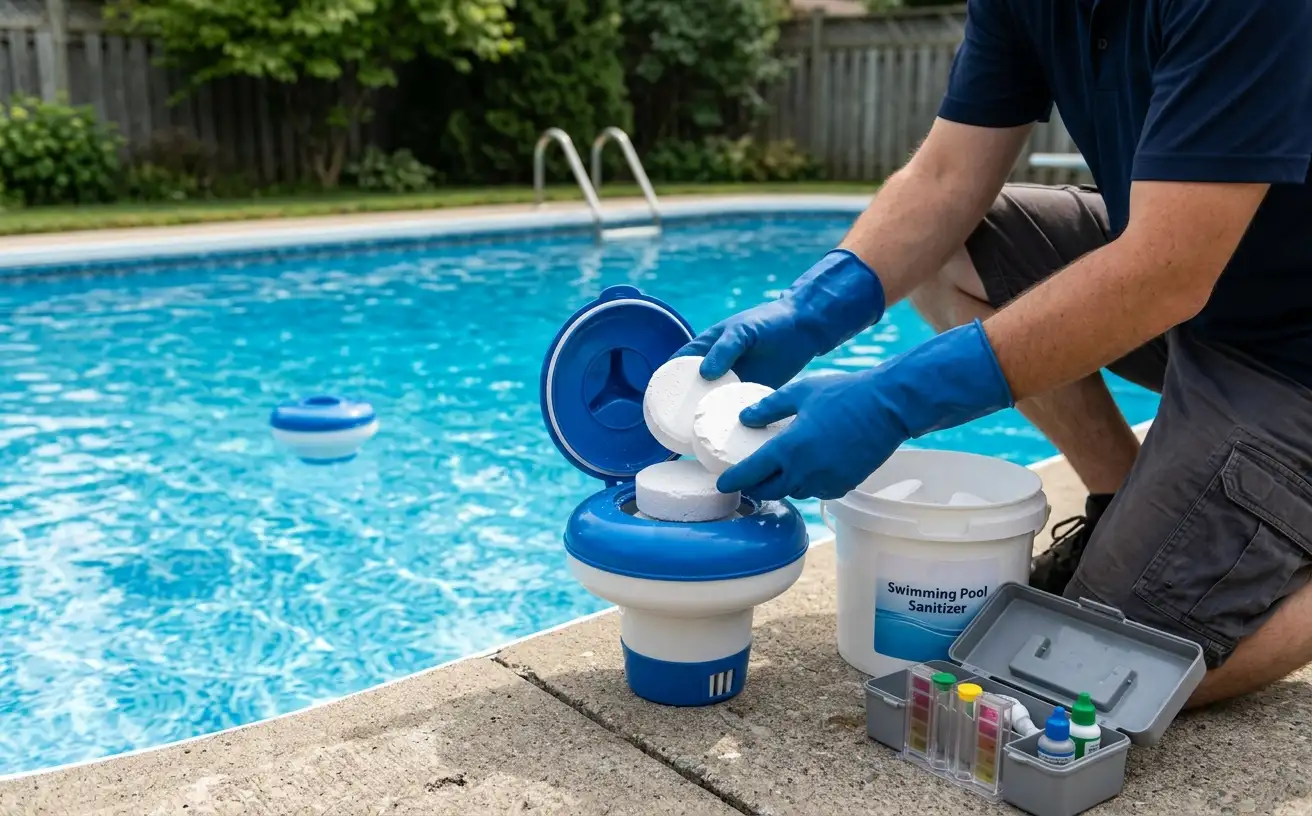
An automatic chlorinator is the best-practice method. These come in in-line types, which are plumbed directly into your system, and off-line types, which attach externally. An adjustable dial controls the dissolution rate, delivering consistent chlorine levels with minimal daily oversight. Only stabilized tablets, meaning Trichlor or Dichlor, are safe to use in a feeder, and you should never mix tablet types in the same unit. A quality pool chemical feeders system is the most reliable, hands-off way to keep your chlorine steady.
Floating dispenser (chlorine floater)
A floating dispenser is the simplest method. Adjustable release ports control how fast the tablets dissolve. There are two important safety rules: never leave the floater in the pool while people are swimming, since concentrated chlorine near skin can cause irritation, and never let the floater rest against the liner or steps for extended periods, as it can cause bleach spots. Protecting a vinyl pool liner from direct tablet contact is essential. Remove and store the floater during closing, and use it for smaller pools or as a supplement to a chlorinator.
Skimmer basket (not recommended)
Some homeowners drop tablets directly into the skimmer basket, but this method is problematic. Highly acidic Trichlor water then flows through your pump, filter, and heater, and over time it corrodes copper components in the heater. It’s only marginally acceptable if the pump runs continuously, which it doesn’t during off-hours. ML’s professional recommendation is clear: use a chlorinator or floater, never the skimmer basket.
How Many Chlorine Tablets Should You Use?
The general rule is one 3-inch Trichlor tablet per 5,000 gallons per week. To dose accurately, calculate your pool volume first. For a rectangular pool, multiply length by width by average depth by 7.5 to get gallons; for a round pool, multiply diameter by diameter by average depth by 5.9. Then adjust based on water testing, targeting a free chlorine level of 1 to 3 ppm. Higher bather loads, hot weather, or heavy rain may call for more, so retest your chlorine weekly to stay on track.
Tablets Are for Maintenance, Not Shocking
Here’s a distinction that confuses many owners: some chemicals, including Cal Hypo and Di-Chlor, come in both tablet form and shock form. The chemical family may overlap, but the form and purpose are completely different, and that difference is what matters.
As tablets, these chemicals are compressed for slow, continuous release. Their job is maintenance: holding your free chlorine steady at a baseline of 1 to 3 ppm, day after day, so your water stays sanitized between service visits.
As shock, the same chemical families are used in concentrated, fast-dissolving doses. Their job is correction: delivering 5 to 10 times the normal chlorine concentration all at once to reset the water, kill algae, and break down contaminants, then dissipating within hours.
A pool relying only on tablets will still develop chloramines, algae, and cloudy water over time, because slow-release tablets never reach the concentration needed to break down organic contaminants. A pool relying only on shock wastes money and effort, since shock isn’t built for continuous dosing. The two are partners, not substitutes: tablets maintain the baseline every day, and shock resets the water when it’s needed.
For a full breakdown of shock products (including Cal Hypo, Di-Chlor, and non-chlorine oxidizers used as shock) and exactly when and how to shock your pool, see our companion guide on pool shock treatment.
Chlorine Tablet Safety: Storage and Handling
Chlorine tablets demand careful handling. Store them in a cool, dry, well-ventilated area, matching ML’s chemical storage guidance, and keep them in their original sealed container. Never store tablets near other pool chemicals, especially acids and Cal Hypo, and never mix Trichlor and Cal Hypo in the same container or feeder, as the combination can cause a dangerous chemical reaction.
Always handle tablets with dry hands and use clean, dry scoops if transferring them. Keep them out of reach of children and pets, never reuse empty chemical containers, and ventilate immediately if you notice a strong chlorine smell during handling. Keep a first-aid kit accessible whenever you work with pool chemicals. For the complete safety protocol, our chemical safety guidelines cover safe handling in full detail.
Why Chlorine Tablet Choice Matters for Ottawa Pools
Our local conditions make tablet selection especially important.
Spring pollen surge. Ottawa Valley pollen consumes chlorine rapidly, and stabilized Trichlor tablets hold chlorine far better during peak pollen weeks than fast-dissolving alternatives.
Summer UV and heat. Long, sunny Ottawa days break down unstabilized chlorine within hours. Stabilized Trichlor or Dichlor tablets last significantly longer under intense UV, and regular pool water testing ottawa helps you confirm your levels are holding.
Ottawa Valley hard water. Cal Hypo tablets add calcium to already-hard water, worsening scale and calcium buildup on tiles and equipment. Trichlor avoids this problem entirely.
Short season, high turnover. Ottawa’s compressed swim season means you’ll go through your annual tablet supply in about 4 to 5 months. Buying quality stabilized tablets in bulk before the season starts often saves money.
Winter storage. Chlorine tablets don’t tolerate freeze-thaw storage well, so keep leftover tablets indoors rather than in an uninsulated shed.
Common Chlorine Tablet Mistakes to Avoid
Watch out for these frequent errors:
- Using Cal Hypo tablets in a chlorinator, which damages the unit
- Mixing Trichlor and Cal Hypo in the same feeder or storage container
- Letting a floating dispenser rest against the vinyl liner, causing bleach spots
- Putting tablets in the skimmer basket when the pump isn’t running
- Storing tablets near acids or open flames
- Not tracking cyanuric acid buildup over years of Trichlor use, leading to chlorine lock
- Buying cheap tablets without knowing the active-ingredient percentage
- Adjusting the chlorinator dial without also testing water chemistry
Even the best tablet routine can’t fully prevent problems like green pool water if chemistry drifts, so pair tablets with regular testing.
When to Get Professional Help
Sometimes tablets alone aren’t enough. Reach out for professional help if your chlorine levels won’t stabilize despite proper tablet use, which usually points to stabilizer buildup, or if your chlorinator isn’t dispensing evenly or has stopped working. Persistent cloudy or green water despite tablets running normally, or simple uncertainty about which tablet type or size fits your pool, are also good reasons to get expert eyes on your setup.
You can bring a water sample to ML’s retail store for free testing to pinpoint exactly what’s happening, or hand the whole job off with a professional pool cleaning service plan. For salt pool owners, the right pool salt ottawa supply works alongside any supplemental tablet use.
Get Expert Help with Your Ottawa Pool Chemistry
Managing chlorine and chemistry is far easier with local expertise. For more than 30 years, ML Pool Services has helped Ottawa Valley homeowners keep their water clean, balanced, and safe through every season. Our retail store offers free water testing for chemistry troubleshooting, and our professional maintenance plans put your tablet dosing, chlorinator, and chemistry balancing entirely in expert hands.
A tablet routine also works best alongside a well-maintained system, from a properly sized pump in the swimming pool pumps lineup to a professional ottawa pool opening in spring, a thorough ottawa pool closing in fall, and quality safety cover installation for winter. Homeowners west of the city can book dedicated pool closing kanata service, and if you ever suspect hidden water loss affecting your chemistry, professional pool leak detection can identify the cause. Explore the full range of pool services and pool products we offer.
Ready to simplify your pool chemistry? The team behind ottawa pool services at ML Pool Services is here to help. Contact us to get started with a free, no-pressure quote.