Chlorine has sanitized pools for a century, and it still does the core job well. But many Ottawa pool owners are adding a second line of defense, UV or ozone systems, to get cleaner, gentler water while relying on less chlorine. These supplemental sanitizers neutralize contaminants that chlorine struggles with and reduce the harsh smell, irritation, and heavy dosing that come with a chlorine-only pool.
This guide explains how UV and ozone systems work, how they compare, and whether one makes sense for your pool. Importantly, these are supplements, not replacements, and understanding that distinction is the key to using them well.
Quick Answer: What Are UV and Ozone Pool Sanitizers?
UV and ozone systems are supplemental sanitizers that treat water as it passes through your pool’s plumbing, destroying bacteria, viruses, and organic contaminants without adding chemicals. UV uses ultraviolet light, while ozone uses ozone gas. Both dramatically reduce how much chlorine you need, improving water comfort, but neither fully replaces chlorine, since a small residual sanitizer is still required in the pool itself. They’re a comfort-and-efficiency upgrade, not a chlorine-free solution.
| System | How it works | Main benefit | Still needs chlorine? |
|---|---|---|---|
| UV | Ultraviolet light destroys contaminants | Gentle water, lower chlorine use | Yes, low residual |
| Ozone | Ozone gas oxidizes contaminants | Powerful oxidation, less chlorine | Yes, low residual |
| Chlorine only | Chemical sanitizer in the water | Proven, residual protection | It is the sanitizer |
Why Consider a Supplemental Sanitizer?
A chlorine-only pool works, but it has downsides many swimmers know well: the chemical smell, dry skin and stinging eyes after a long swim, and the constant dosing to keep levels right. Those complaints usually trace back to chloramines, the spent compounds chlorine forms as it binds with contaminants. UV and ozone break down those contaminants before they consume your chlorine, so you get clearer, more comfortable water with less of the harshness.
For Ottawa owners, there’s an efficiency angle too. Less chlorine demand means fewer chemicals bought and handled across our short season. If you’re already rethinking your approach, our comparison of chlorine alternatives and traditional chlorine covers the broader trade-offs, and supplemental sanitizers fit alongside either a chlorine or salt setup.
How UV Pool Sanitizers Work
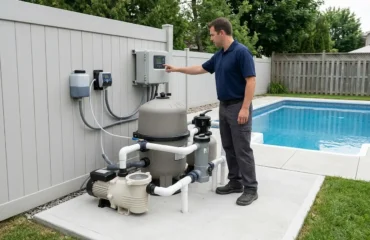
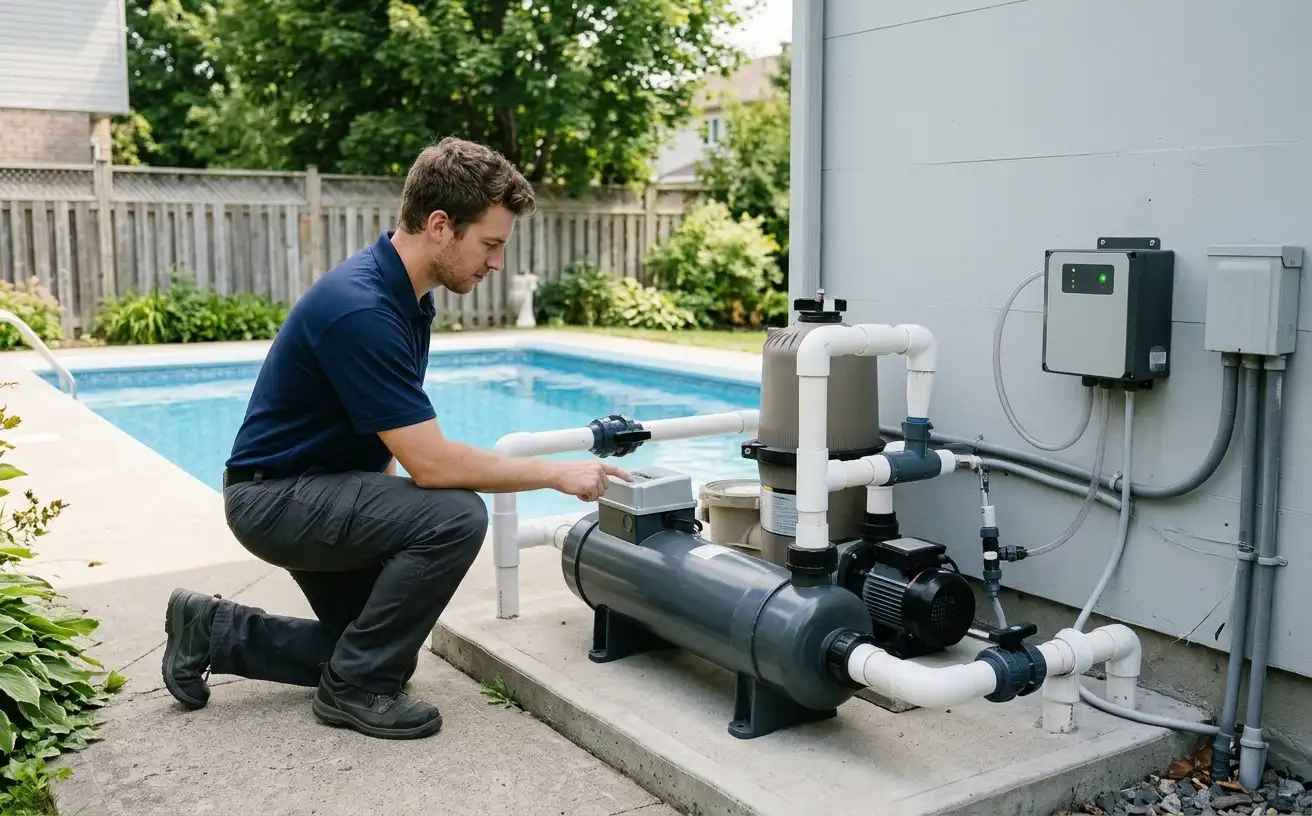
A UV system installs in your pool’s plumbing, after the filter. As water flows through a chamber, a UV lamp bathes it in ultraviolet light at a wavelength that destroys the DNA of bacteria, viruses, and algae, rendering them harmless. The treated water then returns to the pool.
Benefits of UV
UV is highly effective against chlorine-resistant organisms, produces no byproducts of its own, and noticeably reduces chloramines and the associated smell and irritation. It runs quietly in the background whenever your pump is circulating water.
Limitations of UV
UV only treats water as it passes through the chamber, so it provides no residual protection in the pool itself, which is why a small chlorine residual is still needed. The lamp also needs periodic replacement, typically once a year, to stay effective. Because UV works on circulated water, it depends on good flow, which makes a healthy pump and regular pool water testing ottawa important for confirming the system is keeping up.
How Ozone Pool Sanitizers Work
An ozone system generates ozone gas, either with a UV lamp or a corona discharge unit, and injects it into the water flow. Ozone is a powerful oxidizer that destroys contaminants on contact, often more aggressively than chlorine, then quickly reverts to ordinary oxygen.
Benefits of ozone
Ozone is one of the most powerful oxidizers available for pool water. It tackles a broad range of contaminants, cuts chlorine demand significantly, and, like UV, reduces chloramine buildup for a gentler swim. Many owners who struggle with persistent water-quality issues find ozone makes a real difference.
Limitations of ozone
Like UV, ozone treats only the water passing through the system and leaves no residual in the pool, so a low chlorine level is still required. Ozone equipment is generally the higher-cost option and benefits most from professional sizing and installation to match your pool’s volume and flow.
UV vs. Ozone: Which Is Right for Your Pool?
Both reduce chlorine use and improve comfort, so the choice comes down to your priorities. UV is simpler, lower-cost, and easy to maintain, making it a great entry point for owners who mainly want gentler water and fewer chloramines. Ozone offers more aggressive oxidation and can handle heavier contaminant loads, which suits owners dealing with stubborn water-quality problems or higher bather loads.
Neither eliminates the need for a sanitizer residual, and neither replaces good fundamentals. Both systems work best on a pool that’s already well maintained, with balanced chemistry and solid filtration. If your water currently turns cloudy or tints green, address that first, since our guide on green pool water explains the chemistry behind it.
These Systems Supplement, They Don’t Replace
This is the most important point to understand. UV and ozone treat water only as it circulates through the equipment, so the water sitting in the pool between passes still needs a protective sanitizer residual. That means you’ll still use chlorine, just far less of it.
Your everyday chlorine delivery continues to matter. Many owners pair a supplemental system with slow-release chlorine tablets in a feeder to hold a light, steady residual, while the UV or ozone system handles the heavy lifting. When shock treatment is occasionally needed after a storm or heavy use, our guide to pool shock treatment covers when and how, even on a pool running UV or ozone. And you’ll still want quality pool chemicals ottawa suppliers stock for pH and alkalinity balancing, which these systems don’t address.
Ottawa-Specific Considerations
Our climate and season shape how these systems fit. The short swim window means a supplemental system runs only four to five months a year, so factor that into the payback when weighing the upfront cost. Ottawa’s heavy spring pollen loads also hit UV and ozone pools, and while both reduce chlorine demand, a pollen surge still calls for extra attention and occasional shocking.
Hard water matters too. The Ottawa Valley’s mineral content can leave scale on equipment, including sanitizer chambers and cells, so staying ahead of calcium buildup protects your investment. Confirming balance through regular swimming pool chemical testing keeps both your chemistry and your supplemental system performing as intended.
Installation and Professional Setup
UV and ozone systems involve electrical connections and plumbing integration, which makes professional installation the sensible path. Correct sizing to your pool’s volume and flow rate is what determines whether the system actually keeps up, and that’s a judgment call best left to an experienced installer.
A professional pool equipment replacement assessment can evaluate your current setup and recommend whether UV, ozone, or a different approach fits your pool and budget. Adding a supplemental sanitizer is also a natural time to review aging equipment so everything integrates cleanly.
Maintaining a UV or Ozone System
These systems are low-effort but not no-effort. UV lamps need annual replacement to stay effective, ozone units need periodic checks of their generating components, and both depend on good circulation and a clean filter to work properly. Balanced water remains the foundation, so routine weekly pool maintenance keeps the whole system performing, and a hands-off pool cleaning service plan handles it entirely if you’d rather not.
Seasonal care applies as well. A thorough ottawa pool closing properly shuts down and protects the system before winter, and a professional ottawa pool opening brings it back online in spring. Homeowners west of the city can coordinate around their pool closing kanata service.
Get Expert Help Choosing a Pool Sanitizer
Deciding whether UV, ozone, or a supplemental system is right for your pool is easier with local guidance. For more than 30 years, the team behind ottawa pool services at ML Pool Services has helped Ottawa Valley homeowners improve their water quality with the right equipment for our climate. They can assess your pool, explain the realistic benefits, and size and install a system that actually delivers. You can also explore the full range of pool services and pool products they offer.
Ready for cleaner, gentler water with less chlorine? Contact the team for a free, no-pressure quote, or call 613-832-3893 to discuss your options.