Ottawa’s winters are among the most demanding in Canada for pool owners. With average January temperatures plunging to −10°C and freeze-thaw cycles that can wreak havoc on exposed plumbing, improper pool winterization isn’t just an inconvenience, it can result in thousands of dollars in preventable damage.
This guide explains why professional pool closing matters in Ottawa’s climate, what can go wrong without proper winterization, and how expert service protects your investment.
Understanding Ottawa’s Climate Challenges
Ottawa experiences some of the most extreme temperature swings in Ontario. Winter temperatures regularly drop below −20°C, while the freeze-thaw cycles common in late autumn and early spring create conditions that are particularly destructive to pool infrastructure.
Water expands approximately 9% when it freezes. Any water remaining in pool plumbing lines, pump housings, filter tanks, or heater cores can crack these components when temperatures drop. In Ottawa, this isn’t a rare occurrence, it’s an annual certainty.
What’s at Risk Without Proper Closing
- Plumbing damage: Cracked pipes and fittings from frozen water are the most common and costly winter pool damage in Ottawa.
- Equipment failure: Pump housings, filter tanks, and heater heat exchangers can all crack if not properly drained.
- Liner damage: Ice expansion against the liner can cause tears, stretching, and premature failure. In severe cases, a full in-ground liner replacement may be needed come spring.
- Structural issues: Concrete and vinyl pools alike can suffer structural damage from ice pressure, often requiring professional pool repair.
- Water chemistry problems: Improperly balanced water over winter leads to staining, scaling, and algae that complicate spring pool opening.
The Professional Pool Closing Process
When you hire a professional for your Ottawa pool closing, trained technicians follow a systematic process designed to protect every component of your pool system.
Complete Equipment Winterization
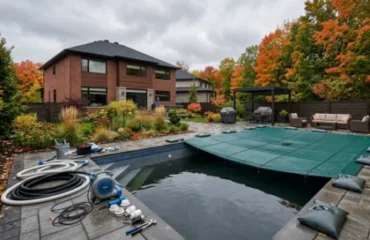
This crucial step involves draining all water from your swimming pool pump, filter, heater, and plumbing lines. Professional technicians use commercial-grade blowers to force water out of underground plumbing, something that household tools simply cannot match. They add pool-grade antifreeze to lines as an additional safeguard. Any chemical feeders or salt chlorination systems are also drained and disconnected for winter.
Water Level Management
Proper water level is critical. Too high risks ice damage to the skimmer and coping. Too low puts pressure on the liner and pool walls. Ottawa city by-laws also regulate how pool water can be drained, which professionals understand and follow.
Winter Cover Installation
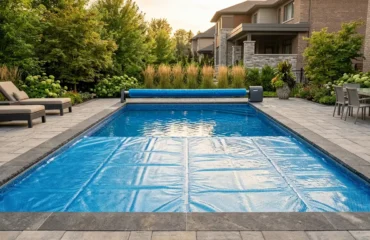
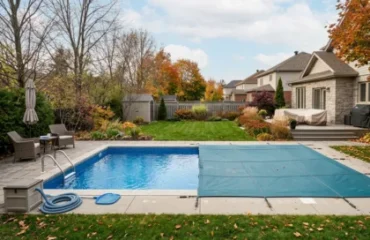
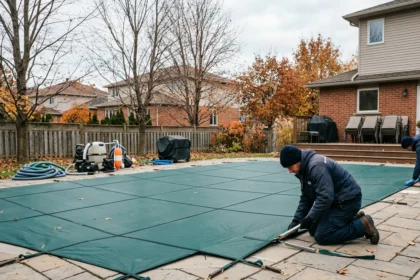
A properly installed winter cover does more than keep out debris, it provides structural support, prevents UV degradation, and keeps unauthorized access restricted for safety. For enhanced protection, a safety cover installation offers superior strength and child/pet safety throughout the off-season.
Chemical Balancing
Before sealing the pool, water chemistry must be carefully balanced. A professional water analysis ensures proper pH, alkalinity, and calcium hardness levels to protect the liner and pool surfaces from staining and damage throughout the long Ottawa winter. A winterizing chemical kit provides ongoing protection.
The Real Cost of Improper Closing
Homeowners who skip professional closing or attempt inadequate DIY winterization often face costly consequences:
- Burst plumbing lines: $500 to $2,000+ to repair underground pool plumbing.
- Cracked pump or filter: $300 to $1,500 for pool equipment replacement.
- Heater damage: $500 to $3,000+ for heat exchanger repair or heater replacement.
- Liner replacement: $4,500 to $8,000+ for a new in-ground liner.
- Delayed spring opening: Weeks of lost swimming time while repairs are completed.
Compare these potential costs to the $300–$500 investment in professional closing, and the value becomes clear.
When to Close Your Pool in Ottawa
The ideal time for pool closing in Ottawa is when water temperatures consistently fall below 15°C, typically between mid-September and mid-October. Closing too early risks algae growth under the cover from warm stagnant water. Closing too late risks equipment exposure to freezing temperatures.
Professional providers book up quickly in autumn. Schedule your closing 4–6 weeks in advance to secure your preferred date.
Choosing a Professional Pool Closing Provider
When selecting a provider for your pool closing, look for:
- Local experience: Technicians who understand Ottawa’s specific climate challenges
- Comprehensive service: Full equipment winterization, not just cover installation
- Certifications: WSIB certification and Pool & Hot Tub Council of Canada membership
- Track record: Established companies with years of local service history
- Clear pricing: Detailed breakdown of what’s included and what costs extra
Request a free estimate to understand exactly what your closing will cost. Don’t wait until temperatures drop to schedule your pool closing. Contact us today to protect your investment through Ottawa’s demanding winter.