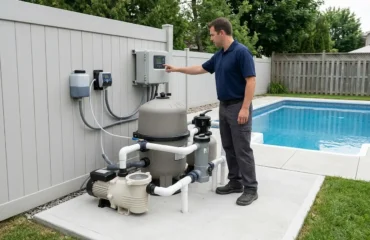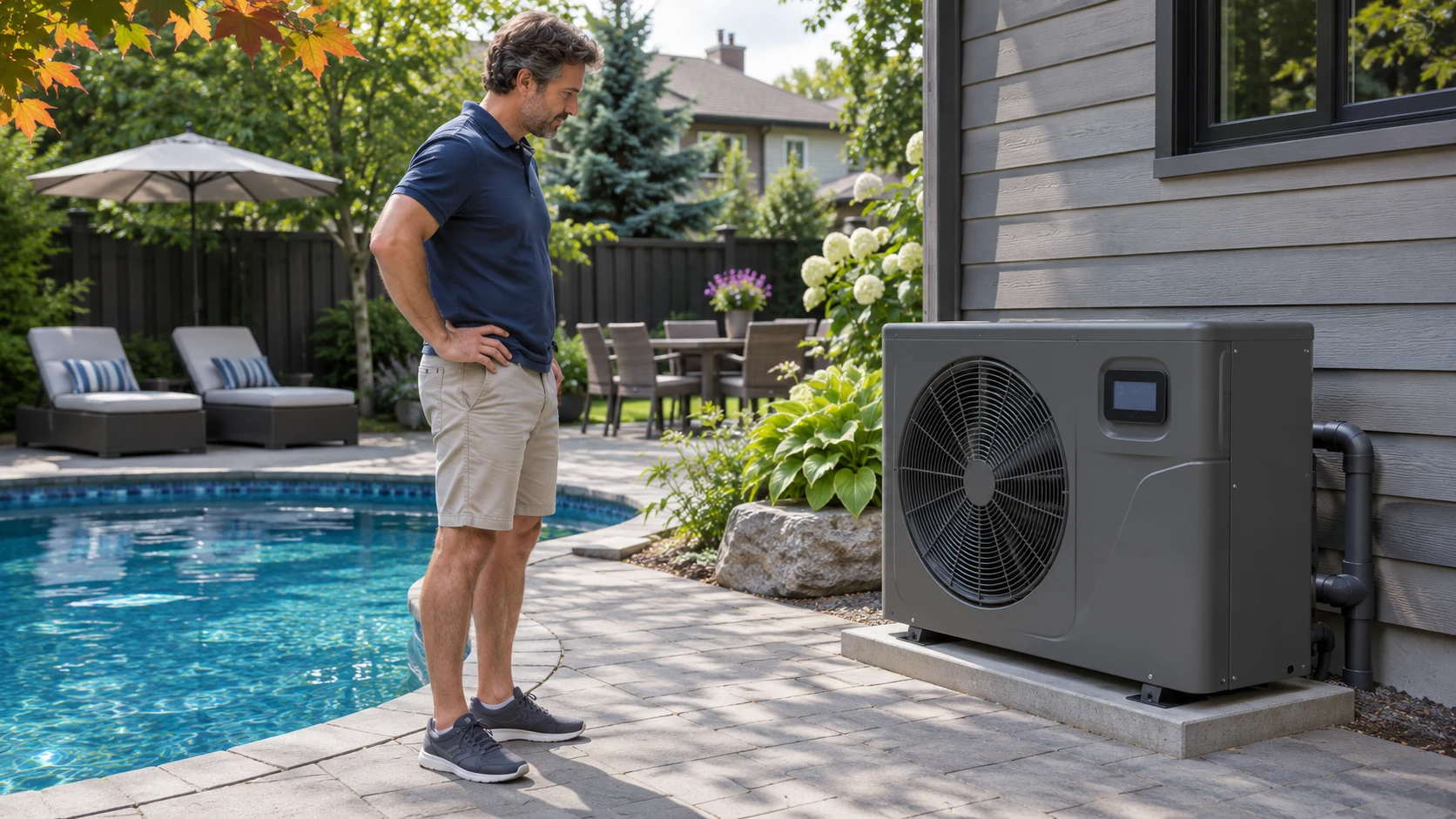
A pool heat pump that is running without noticeably warming the water does not always have a failed component. The settings, operating conditions and water circulation all matter. The useful first step is to describe what the unit is doing—not to start taking it apart.
This guide helps Ottawa pool owners separate observations they can make from work that needs professional attention. If you are looking for help assessing pool equipment for repair or replacement, a few clear details can make the first conversation much more productive.
If the heat pump does not start
Begin at the normal user controls. Note whether the display is on, whether heating is enabled and what target temperature is selected. Compare the target with the water temperature shown by the controller. If the requested temperature has already been reached, the lack of a heating cycle may be expected.
Where a separate pool controller manages the heater, record its setting too. A setting on the heat pump and a schedule on another controller can be easy to confuse. Take a photo rather than changing several settings at once; the original configuration is useful information for whoever checks the system.
Is this a new problem or a new setup?
There is a difference between a heater that worked yesterday and one being started for the first time after installation, winterization or an equipment change. Mention any recent work on the pump, filter, valves or controls. The timing may help narrow the investigation, but it does not prove which component is responsible.
If the display is blank, report that specifically. Do not remove electrical covers, test internal wiring or repeatedly reset a tripping breaker. Those are service issues, not useful homeowner experiments.
If it runs, but the pool stays cool
A heat pump draws heat from the surrounding air. Its performance depends on the conditions and its model-specific operating range. Cooler weather can change what you should expect, so use the manual for your exact unit rather than a temperature limit quoted for a different model.
Record the air temperature, the pool temperature and how long the unit has actually been operating. “It ran during the afternoon and the water changed from one reading to another” is more helpful than “it never heats.” Use the same thermometer or controller for the comparison and avoid judging performance from a single touch of the water.
Check the whole heating situation
Consider what changed around the pool: a cold refill, a different operating schedule, a cover no longer being used or a recent change to circulation. These observations help a technician assess the complaint without assuming that the heater alone is at fault.
For example, imagine that the unit heated the pool satisfactorily last week, but this week the circulation schedule was shortened. Tell the service team about both changes. This is a troubleshooting example, not a diagnosis or a recommendation to select a particular run time.
ML’s pool heater options include heat pumps as well as gas and propane heaters. If you are unsure which type you own, send the model label. The checks and service requirements differ; advice for a gas heater should not be applied to an electric heat pump.
If the display shows an error or operating message
Write down the exact wording before it disappears. A low-flow message, an ambient-temperature message and a sensor fault should not be treated as interchangeable. The code description and next step depend on the manufacturer and model.
Use the owner’s manual to identify the message, and tell the service team whether it appeared immediately, after a period of operation or following another change. Do not bypass a flow switch or other protective control to make the heater run.
What about circulation?
Observe whether the circulation pump is running and whether the pool returns look different from normal. Note the filter gauge reading if it is visible from a safe position. Do not turn unfamiliar valves or open equipment to investigate a heater message.
A heating complaint can require assessment of more than the heater. ML’s pool repair services cover equipment problems, while pool plumbing repair may be relevant when the investigation identifies a plumbing issue. Let the diagnosis determine the work.
What to leave to a professional
Internal electrical work, refrigerant work and changes to protective controls belong with appropriately qualified service professionals. Repeated shutdowns, an unusual burning smell or visible equipment damage are reasons to stop troubleshooting and seek guidance. Follow the manufacturer’s shutdown instructions when it is safe to do so.
Likewise, do not cover a running heat pump to try to make it warmer, or use an improvised enclosure. Keep the equipment in the installation arrangement specified by its manufacturer. If landscaping has changed around the unit, photograph that setting for the service team.
Make the service call useful: send a short symptom record
You do not need to identify the failed part. Send the information that helps the team understand the problem:
- Equipment: brand, model and a photo of the label and exterior.
- Symptom: not starting, running without enough heat, or stopping with a message.
- Conditions: air temperature, water temperature, target setting and recent operating time.
- Timing: when it last worked normally and any recent opening, maintenance or control changes.
- Display: the exact error wording or a clear photo.
Ask what the initial assessment includes, whether parts can be identified in advance and what information is needed to discuss the next step. A fault description alone cannot establish a repair price, parts availability or completion date.
Repair first, or consider a different heater?
Start with the cause of the problem. If a replacement is recommended, ask how it compares with repairing the existing unit and whether the proposed model suits the pool and intended season of use. A larger purchase should follow an assessment, not just a frustrating day with cool water.
The pool heater buying guide can help you understand the main types before that conversation. This article’s role is to help you report a fault clearly, rather than choose a new heater prematurely.
Contact ML Pool Services about your heat pump problem
Call 613-832-3893 with your model and symptoms to discuss assessment and the appropriate service route.